Home · Services · Electrical Fire Cleanup
Electrical Fire Cleanup in Richardson, TX
Quick answer
Cleanup and safety steps after an electrical fire, from a panel or outlet to an appliance or wiring failure.
Electrical fires in Richardson concentrate where the stock says they should: 1960s and 1970s panels and wiring carrying fifty years of added load, garage circuits, and attic runs in extreme summer heat. Lightning adds the metroplex's signature electrical event each storm season. The cleanup discipline starts with the electrical verdict, not the mop: the cause circuit is identified and made safe, soot from burned insulation and plastic is handled as the acidic material it is, and nothing is re-energized to test it. The electrician's findings belong in the restoration file.
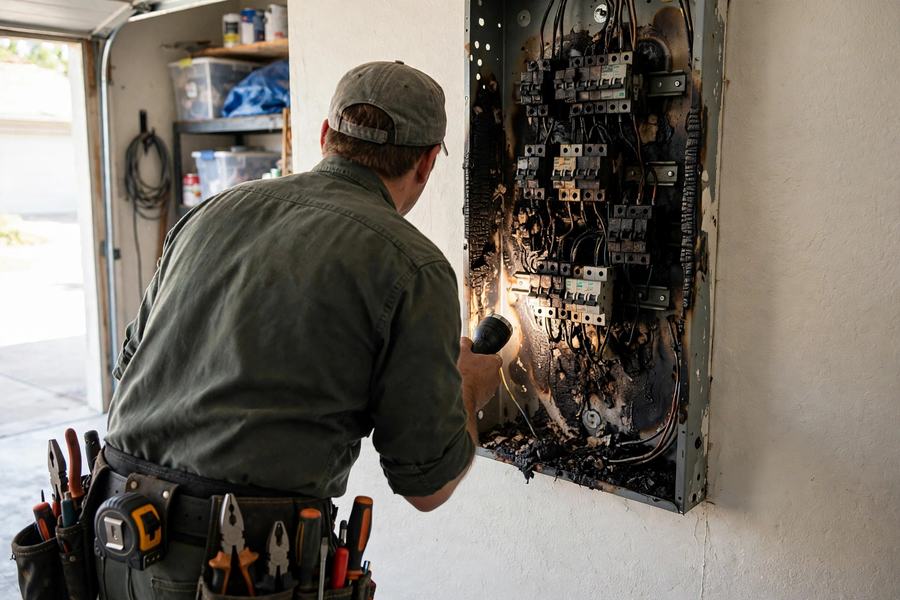
Signs you need electrical fire cleanup
- A burning plastic or ozone smell came from an outlet, panel, or appliance
- A breaker panel, meter base, or wiring run shows charring or melting
- An appliance caught fire or sparked heavily before being unplugged
- Part of the home lost power in the incident
What the job involves
What affects the price
- Where the failure started and how much wiring or equipment is involved
- Whether the panel or service equipment is damaged (an electrician's scope, priced separately)
- Smoke spread through the home
- Age of the home's wiring, which affects what else the electrician flags
- Contents affected near the source
When it is an emergency
Treat the electrical side as unresolved until an electrician clears it, even if the fire looked small. Restoration can start on smoke and soot, but power restoration and any re-energizing wait for that clearance. If the smell of burning plastic returns after power is back, kill the breaker and call again.
PLACEHOLDERElectrical Fire Cleanup across the Richardson area
Related services
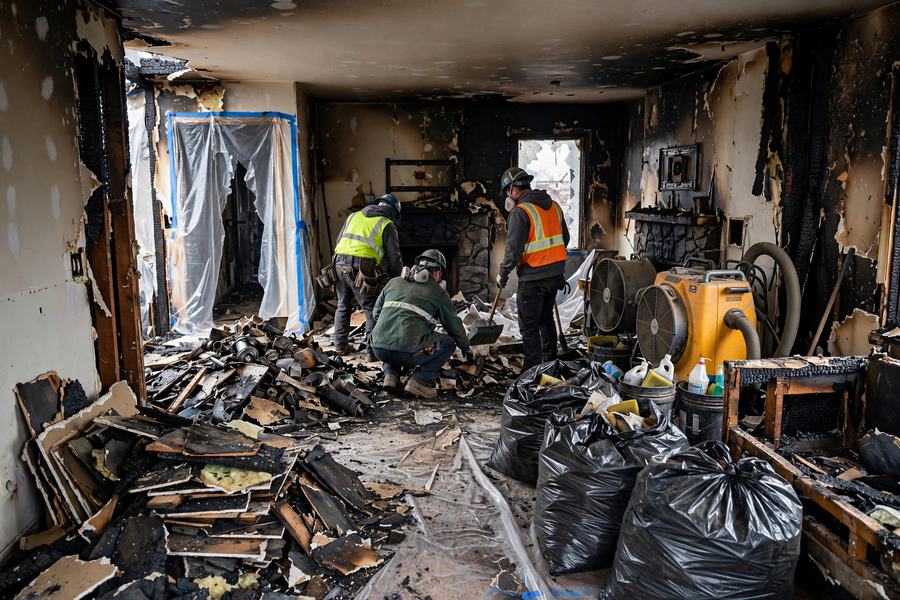
Fire Damage Restoration
Full restoration after a fire in the home: securing the property, removing what burned, cleaning smoke and soot, and rebuilding what the fire took.
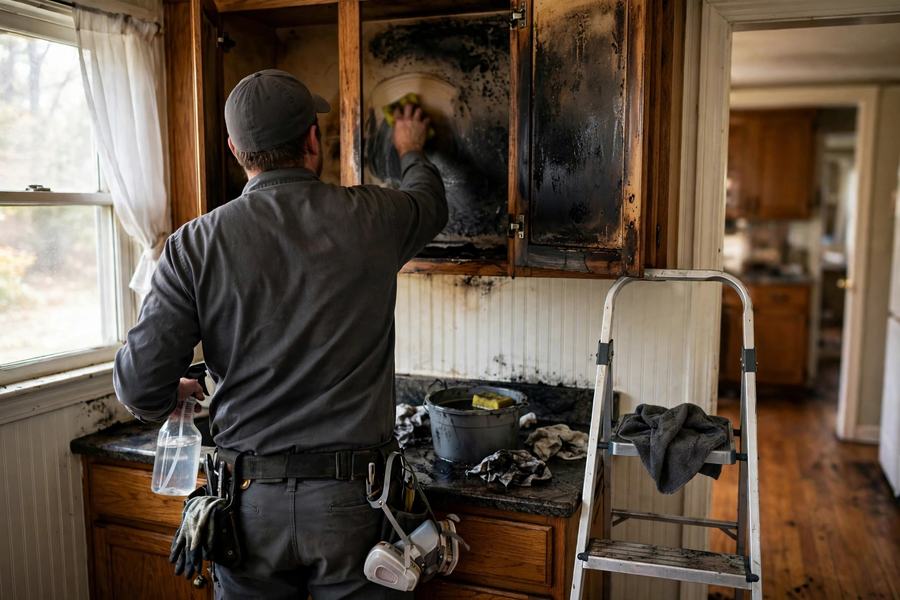
Smoke Damage Cleanup
Cleaning smoke residue and odor from walls, ceilings, and belongings, including in rooms the flames never reached.
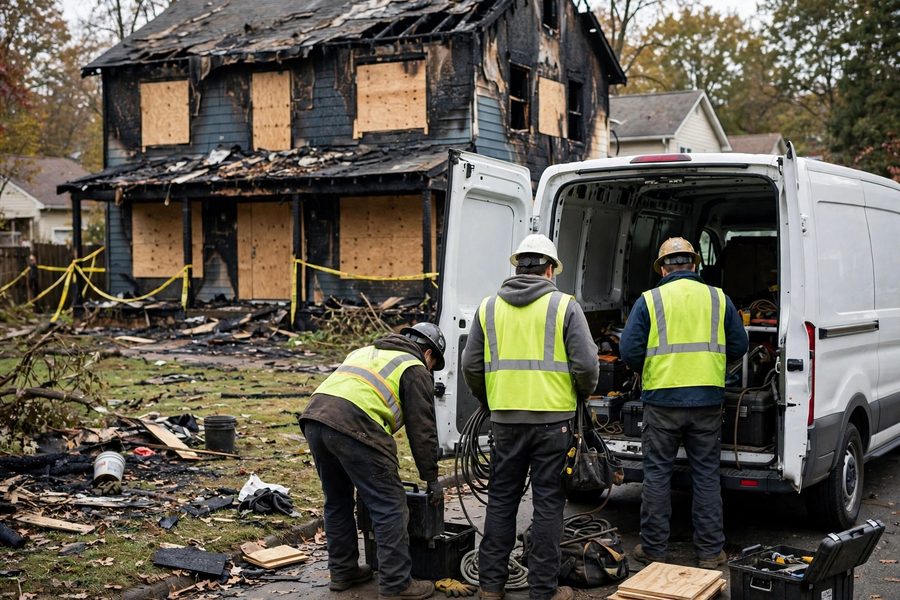
Emergency Board Up and Tarping
Securing a fire damaged home the same night: boarding broken windows and doors, and tarping roof damage so weather stays out.
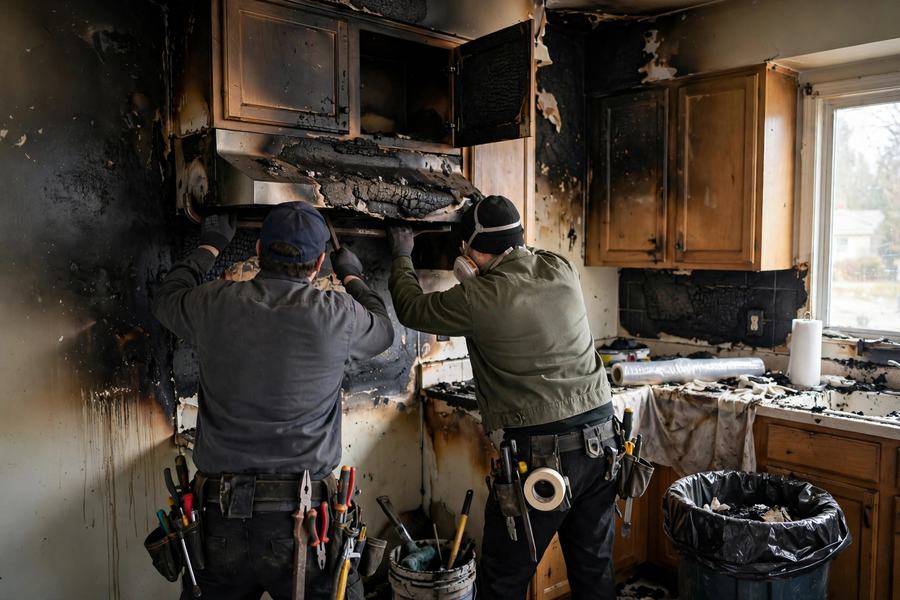
Kitchen Fire Cleanup
Cleanup after a cooking or grease fire, where the flames may be small but the protein smoke coats the whole home.
Electrical Fire Cleanup questions, answered
When is electrical fire cleanup an emergency?
Treat the electrical side as unresolved until an electrician clears it, even if the fire looked small. Restoration can start on smoke and soot, but power restoration and any re-energizing wait for that clearance. If the smell of burning plastic returns after power is back, kill the breaker and call again.
What affects the price of electrical fire cleanup in Richardson?
The main price factors for electrical fire cleanup are covered in the cost section above. The contractor confirms the exact price in a written estimate after seeing the job, and nothing is owed until you approve it. The call and the referral are free.
How long does fire restoration take?
Smoke only losses typically take one to two weeks from first cleaning to odor treatment. A fire that damages structure runs to months: one or two rooms with structural work commonly take three to six weeks of active repair, and larger structural losses can run three to nine months including permits and inspections. The variables are the scope the insurer approves, material lead times, and inspection scheduling. A contractor should give you a phase timeline in writing, not a single date promised on the phone.
Can I clean soot and smoke damage myself?
For a very light smoke film in one room, careful cleaning is possible, but two warnings matter. First, never wet wipe soot before dry lifting it: water and household cleaners smear soot and can set stains into paint permanently. Second, protein smoke from a kitchen fire and soot inside ducts, cabinets, and wall cavities are beyond household tools, and acidic soot left sitting etches metals and finishes within days. If the smell or film reaches more than the room that burned, a professional assessment is the safer call.
Will insurance pay for temporary housing after a fire?
Usually yes, if your policy includes loss of use (Coverage D), which most standard homeowners policies do. It pays the additional living expenses of being displaced, hotel or rental, and the increased cost of meals and essentials, up to your policy limit, while the home is uninhabitable due to a covered loss. Keep every receipt from the first night. If the home is habitable after the assessment, loss of use generally does not apply, which is one reason the habitability decision gets documented carefully.
Request a callback
Prefer to talk later? Leave your details and an independent local pro will call you back. No charge to you, no obligation.
Duck Creek Fire Restoration is a free referral service. Submitting this form connects you with independent local contractors who provide the work.